

Leaderboard
-

silverado427
Premier Member10Points7,501Posts -

Displaced Texan
Premier Member7Points6,122Posts -
kc17
Members5Points1,162Posts -
PK90
Premier Member5Points10,843Posts




Popular Content
Showing content with the highest reputation on 07/26/2020 in all areas
-
5 pointsCommon sense. By definition, the mag must be able to feed ammo into a firearm. If a part is missing, it won't work. Also, you can't possess all the parts spread in different locations that you have access. If you could, everyone would have a disassembled machinegun.5 points
-
2 pointsI finally made it to the range with my new to me Marlin 60 that I picked up from @dajonga and I like it! I told my wife I think she'll like it also, and so will our nieces & nephews. Reloading is slightly tedious, but on the upside that slows me down and helps me appreciate the range time. I also sent the first 50 rounds downrange from my SIG P320, I like that too! I just wish ammo wasn't so darn expensive and scarce! Thanks again to David for the smooth transaction of a fine rifle.2 points
-
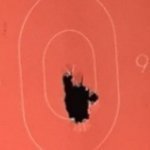
2 points2 points2 pointsSO ,yesterday A friend who is also registered for MR. Stu's IDPA intro class went shooting to knock some off the rust off. I left thinking this. 1. Its very easy to miss a 8 inch circle target at 10 yards. 2. There is no such thing as too much practice 3. When you think you got it down , you are just figuring out you dont know Sh&t. 4.. I waited an hour to shoot, due to crowds, whatever BS is going on out there is getting very real, the place was loaded with people you would never see at the range before. 5.. The gun and ammo shortage is very real. 6. Shooting the course with a glock 19 is very possible but you better practice. I Told my friend Im looking at the glock 34 for this and future events and he said something I have no answer for , which still goes round as a philosophical exercise in my head. Its defensive pistol right? He said im gonna shoot what I carry. That my friends is the truest statement I ever heard. Even though the 34 is designed for competition, I would never ever carry one but I do carry the 19 and the 43. So? whats more important to try and win ? Which I believe everyone that does something should strive to learn and excell in, or work with something that may give one an edge but would never practically use outside the range? I know its a silly exercise in mental gymnastics . my 1 cent for today2 pointsIMG_4216.MOV1 point1 point1 point"It depends." The summer after Trump took office, there were 130+ intercepts over the Bedminster golf course within the first couple of months. Too many pilots were remaining clueless, so the Secret Service invited all local private pilots to a seminar in Bedminster. It was fascinating. The head of the presidential protection detail, one of the coast guard chopper intercept pilots, the head of the Allentown TRACON (the big cheese for that sector of airspace) all spoke. There may have been one of the fighter pilots present as well. Normal intercept procedure for a 'slow' private plane is to scramble a coast guard chopper they base at Somerset airport during presidential visits. It can catch most light planes, but has no trouble slowing down to match their speed. It's got a big lighted sign board on the side, and when it pulls along side it first displays 'tune 121.5' the emergency frequency the pilot should have been monitoring in the first place. They can give instructions over the air, but if that doesn't work, they can also use the sign board to give heading instructions and tell the plane where to land. If that doesn't work, or if the chopper can't get there in time, they scramble the fighters from one of the NYC area airports. They might be F15's, F16's, or F35's depending on the weekend--they rotate deployments. The lead fighter will slow as much as possible, pull along side to eyeball the trespasser, and try to establish radio contact or use visual intercept procedures Intercept procedures . If those don't work, they can perform a head-butt maneuver (pass under the target aircraft, then make an abrupt vertical climb in front of the target's nose) or fire flares. So far, one of more of those steps have always worked, but so far they've only been dealing with idiot pilots who weren't paying attention to the Temporary Flight Restriction. The Secret Service guy did say that a shoot-down authorization could only come from one of a handful of people in Washington, one of whom was always available for an instant consult. There is no local authority to shoot down a civilian aircraft. Once the pilot lands, they are met by local law enforcement (dispatched as soon as the landing location is known), and local law enforcement holds the pilot until the Secret Service arrives. The plane is inspected, and the pilot is taken away for a lengthy interview. The enforcement action taken depends on the severity of the infraction (Nicked the outer edge of the TFR? Barreled directly through the inner 10-mile no-fly zone?), the pilots history (Previous violations? Records show pilot normally gets a flight briefing but didn't today for some reason?). Were there any mitigating circumstances? (GPS satellite out of service? Electronics problems in the plane?) Penalties range from a temporary certificate suspension (perhaps with a requirement for some re-training), to a much longer certificate suspension, to permanent revocation. I think there is also a provision for substantial fines, but I'm not positive about that. If criminal intent is shown, that's a whole different thing... Interestingly, a lot of the violations the first year were guys just going up to practice take-offs and landings. Pattern altitude at some of the airports in the TFR is below radar coverage, so guys figured they could stay in the pattern for practice, and never be spotted on radar. The Secret Service guy made clear to us that airborne radar always follows the president. "Taxi around all you want, but if your wheels leave the ground, we'll know it" was the way he put it.1 pointI loaded and fired ten rounds of 9mm today. Average COAL 1.156, 3.6 grains of Hodgdon Titegroup, 124gr Coated Truncated bullets from Northeast (ibejiheads never did respond to my email). Was very slow loading using a RCBS Powder Trickler onto the scale for every load. I have an RCBS UNIFLOW but I haven't messed with that yet. As a reminder, most of my equipment was gifted to me by a friend when he left the Country. He never reloaded 9mm. Since I hand poured every round, I seated the bullet after each pour; this eliminated accidentally doing a missed or double charge. I absolutely want to be able to speed the process up. I used an RCBS 3-die set followed up with a Redding taper crimp die, then verified with a Hornady gauge. I had to run a few cartridges through the Redding more than once before I was satisfied with the fit in the gauge, I can't explain that. Cycled them through the hand gun for fun, seemed fine, went to the Range, they all went Bang, no clicks and no BOOMS! I'm contemplating reducing the COAL a hair, to be closer to Factory ammo, also some rounds were closer 1.16. It took me so long to get everything to this point that I'm hesitant to modify anything; even though I know I probably should. Thanks again to all that provided guidance and encouragement along this journey.1 point1 pointI almost wrote that I would let you shot it if I got it, but forgot.1 point1 pointOMFG I can’t stop laughing at that!!! I bet she’s gonna be shopping for a new weave!1 point1 point1 point1 point1 pointHold on, constructive intent by NJ definition applies to assualt weapons, not magazines.. Unless I missed something I dont think constructive intent applies by statutory definition.1 point1 point@grazziehere is a link for your consideration, depending on your needs, 10 magazines for each rifle is a good base number, more is always better. https://dsgarms.com/magazines-dsgtenpack011 point1 pointYep that is what I do. I have a storage unit with Gunsitters located with Elite tactical academy in Easton, PA.1 point1 pointWatch out for constructive intent in NJ. If your friend still has the mags, either send them to a service like gunsitters to store the mags in PA, or send him the mag blocks and corresponding epoxy to permanently block the mags to be able to send them to you legally.1 point1 point1 pointThis month's order arrived with two bags and another sticker on Friday. I had the dark roast "Beyond Black" yesterday and drinking a medium roast "Just Black" now. Both are decent; Just Black has more flavor than the Liberty. I can't say that I have a favorite of the four I've had so far; but I would put the Liberty at the bottom. Even then, the Liberty is not bad, it's just weaker than I prefer. I discovered they have numerous partner discounts as a perk of being in the club as well. I already used one to save $30 on an order, at $25 a month for the coffee, I'm $5 ahead. The club is still cheaper and easier than going to Wawa every day also.1 point1 point1 pointNew Jersey calls it constructive intent. Having all the components in your possession to construct an illegal weapon or magazine. How do I know this? I pay attention and learn the rules so as not to become Bubba's playmate! Is that a good enough answer?1 point1 pointYou can NOT have all the components to construct a magazine over 10 rounds.1 point1 pointVery, very happy to hear you are enjoying it. A Marlin 60 was my first rifle and they will always hold a spot in my heart. I woulda kept this one had I not stumbled into a near perfect long barrel, long tube, LSHO version last year. I really don't need 3 model 60 rifles. FYI...I never did have a look at the buffer...they tend to get brittle and break after a few years. I wish you and yours many years of enjoyment.1 point1 point1 point1 pointSide note - I have been saying this for years - and usually taking shit for it on this very forum. Carry what you shoot the best - not what’s easiest to hide, or lightest on your belt, or most comfortable against your hip/stomach. On the worst day of your life, do you really want “I wish I had my _______ that I shoot the best and am most confident in my abilities with out of all of my guns, instead of this pocket/subcompact/compact pistol that I never train with and shoot mediocrely at best.” Running through your mind? • That being said, a G19 is doable for everything you want it to do. You can compete and carry easily. • On the other hand - with the right belt, holster, and a slight wardrobe adjustment, you can easily and comfortably carry a G34/35 With RDS and X300U 24/7 all year long. Plenty of people do. Hell - bad guys routinely carry and hide full-size guns 24/7. Why are good guys so adverse to this? Personally, I shoot a G34 the best. I shoot my G19 just marginally worse - but a RDS on both guns makes them almost equal. I used to carry the G34 With X300U all the time. Now I occasionally carry the G34 but - thanks to the RDS - 90% of the time I have a G19 with TLR7a and Holosun 508T. BUT - I am at the point with having RDS on both guns and shooting both guns A LOT - that when I carry the G19 I do not feel underprepared or like I have a worse performing option. I am 100% confident in my abilities with the G19. Now, you just need to decide which direction you you want to go from now forward.1 point1 pointi'm kinda not willing to give them that excuse. they need to do what you or i would do at our business....bring on more people to handle the load. but i get what you're saying sir1 point
















Account
Navigation
Search
Configure browser push notifications
Chrome (Android)
- Tap the lock icon next to the address bar.
- Tap Permissions → Notifications.
- Adjust your preference.
Chrome (Desktop)
- Click the padlock icon in the address bar.
- Select Site settings.
- Find Notifications and adjust your preference.
Safari (iOS 16.4+)
- Ensure the site is installed via Add to Home Screen.
- Open Settings App → Notifications.
- Find your app name and adjust your preference.
Safari (macOS)
- Go to Safari → Preferences.
- Click the Websites tab.
- Select Notifications in the sidebar.
- Find this website and adjust your preference.
Edge (Android)
- Tap the lock icon next to the address bar.
- Tap Permissions.
- Find Notifications and adjust your preference.
Edge (Desktop)
- Click the padlock icon in the address bar.
- Click Permissions for this site.
- Find Notifications and adjust your preference.
Firefox (Android)
- Go to Settings → Site permissions.
- Tap Notifications.
- Find this site in the list and adjust your preference.
Firefox (Desktop)
- Open Firefox Settings.
- Search for Notifications.
- Find this site in the list and adjust your preference.