
Leaderboard



Popular Content
Showing content with the highest reputation on 09/19/2020 in all areas
-
7 pointsI'm sure I'll be disappointed, but I'm hoping there will be some decorum and people will not start celebrating a woman's death. Sure, it is an opportunity to balance the court with another constitutionalist, but let's try to be respectful.7 points
-
5 pointsthat holds true for many forms of gov't but not in a functioning republic. Her last 20yrs on the bench she was a terribly biased, jaded, tool of the left, and legislated from the bench5 points
-
5 pointsWell. People die everyday. You have a limited time here. Life is not eternal unless you’re God. At that note. Good timing rbg. Trump 20205 points
-
You've made a lot of assumptions about what a flat tax implies. You can do much like Trump did with deductions and define a significant standard deduction, and just have that with a flat tax. Yeah you don't make much, then 10% may hurt, but 10% also isn't large and thus the deduction is more likely to cancel out your tax burden the less money you make. For grins, lets just say that it is the same as 2019 and we leave out the head of household math and ignore kids and dependents. We'll go with the single renter for now. So, $12,200. Lets say you have a flat tax of 18%. Someone making $100,000 a year would pay $5,800 in taxes. Anyone making $67,777 or less would pay nothing or get money back. Theoretically someone making $10 million a year would owe $1,787,800. But for that to be true, you would not have to differentiate between capital gains and income. The problem with a flat tax isn't dealing with the low income people fairly. Most flat tax proposals deal with it one way or another. Either via a deductible, refundable deductible/credit, or by exempting the first X dollars of income. It's that the task of making a simple income tax system is not possible. It either needs to be complex or touch non-income taxes rather thoroughly. An example. Poof, capital gains is income. OK. I'm rich. I just form a holding company, own THAT, and it owns the stocks and investments. It can sell without me realizing a capital gain. Now you have to make it complex, or extend the flat tax idea to businesses. It actually much easier to keep it form being regressive than something like a VAT. VAT is how most "free" healthcare is paid for. Warren buffet may make a bajillion times more than his poor secretary he always talks about but he's never just going to buy enough shit to make a 17% vat place a meaningful tax burden on him relative to a family of four making $52k a year. Which leads to the thing lots of people like ignoring (or just not realizing), which is capital gains is basically VAT, but only for certain things. Most discussions of tax reform are naive because they ignore the fact that you are talking about how to fund a government, Which essentially means you are talking about changing how that government works. We've gotten to a place that is overly complex and messed up. Most people seem to think something needs ot be changed. what I can guarantee is nothing that happens will be simple. It can't be unless your government is simple. And frankly we expect too much off it for a simple system to work. Do you expect roads and a military? Yeah you already passed simple. However, we are at a point where shit has just been glued on that continuing to do so means that broad swath of citizens are put in financial peril every time someone wants more tax revenue. There is a good bit of hostility towards social programs because the anti-pattern we have seen is that poor people have a problem. Everyone is sympathetic to it, then a bunch of millionaires decide that the middle class needs to pay for it. And even if you have a good idea better than the last one, we never seem to dismantle the old money pit to try a new better idea. The middle class has been dealt with in bad faith for decades upon decades. Saying we will fix it by having the millionaires tax the millionaires is just stupid naivete. We've been down that road. They will jsut see it as an opportunity to manipulate voters by threatening that the other guy will take the new thing away and will make a program and shift the cost of it to the middle class. Then you have people who are like fuck it, I'll keep my money, the rich and poor can go die in a fire. Some others are also naive and believe that if they just make the tax say 20%, the goverment will get their fiscal shit together and deal honestly with the middle class.3 points
-
3 pointsstop; she was a threat to our republic and should be afforded that which she earned. I'm glad, next up?3 points
-
3 points... I did not agree with Her politics as it applied to the Right of the people to keep and bear arms.... however, She embodied what a Person (male/female) can ascend to in this nation, this Republic. Celebrate her life, disagree sure...but do not besmirch her accomplishments... our struggle continues.... may She rest in peace for She did what She thought was right and in the best interest of the nation... She was wrong..but that's another post......3 points
-
3 points
-
3 points
-
2 pointsOk, ok, had to take some over to the neighbor. I had a bit of a change in plans. The wife did not want me to make the entire packer, so I ended up cutting off the flat. Roughly 5 lbs trimmed. I trimmed it at 7pm. Rub is light layer of mustard as a binder. Maple BBQ rub and kosher salt with course ground black pepper Wrapped in saran wrap, went to bed later. Got up at 3:55, fired up the pellet smoker at 225, waited until the temp stabilized. Added my smoke tube. Using applewood pellets. Brisket went on at 4:15. I know others do it by feel, I'm not that confident, so I stuck my temp probe in. At 6:15 I spritzed with apple cider vinegar. At 8, I also spritzed. At 8:30 it hit 160. Wrapped in butcher paper. About 1pm it was still stalled at 171 so I turned up the temp to 250. At 1:20 PM, it was 178, now I'm worried. Lol. I turned it back down to 225. At 2:15, it came off hitting 203. I put into a cooler, still wrapped with temp probe still in for rest. At 4:30, it was at 160. I put in oven at 163 to hold temp until 6pm chow. At 6, I carved. Moist, tasty, juicy! Wonderful. Great bark, nice smoke ring. As good of a flat as one can expect!. The foil is simply because I had already put it away. Wife and I ate, I also gave the neighbors some too. I took back out of fridge for picture.

 2 points
-
2 pointsI love the Stag I bought three years ago. They don't make my model anymore but I have nothing but praise for them. I have at least 4,000 rounds through mine.2 points
-
2 pointsEssentially the same rifle with these spec differences: bolt carrier has a chrome lining on the M4 gas system: mid length vs carbine length For me, the question is "do you want to add an optic or accessories (light, grip, sights"? Then pick the M4 as it already has a rail.2 points
-
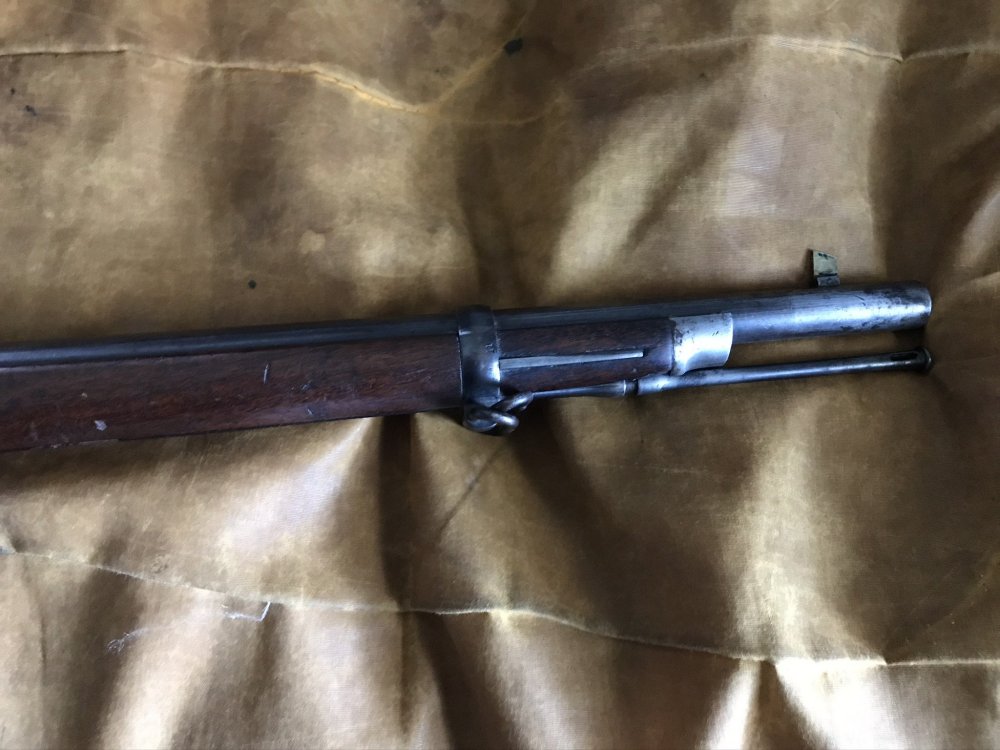
This was an improvement upon the original Springfield Trapdoor 1873 with a new rear sight. It also has the round-rod bayonet, the front sight blade needs to be replaced but I will do that beforehand. $1000 or best offer Or willing to trade for a Marlin 1895 SBL



 1 point
-
1 point
-
Used easy bird trapthrower....about 5 years old...used two season up at layton and stored... Includes all thrower items, works fine...comes with two boxes of birds... 90cnt. Asking $225.00 OBO - will take PP friends family - compare at- https://www.amazon.com/Champion-Traps-and-Targets-40910/dp/B000KKE5XI ....will meet as far down as the junction of Rt23 and 287... First ill take it gets it posted in thread and followed by PM

 1 point
-
1 point
-
1 point
-
1 point
-
1 pointmy best shortgun is the WINCHESTER SXP DEFENDER. its dual steel sidebar and its inflex technology recoil pad makes it a kinda shortgun i will always love to use anytime.1 point
-
1 pointthe STAG-15, is a semi-automatic riffle, which is targeted mainly at the civilian. while the STAG-16, which is used by the police and military, is a select fire rifle which can shoot in a semi-automatic mode, burst mode, or in a fully automatic mode. when the two riffle are compared to each other through there parts like the trigger, disconnector, hammer, auto sear,bolt carrier, safety selector and lower receiver. the STAG-16 would be a choice to pick1 point
-
Yup! I've got a few cases of clays. No not all are for me...1 point
-
1 pointAlso check to make sure you NAT type is open. This is really important for Xbox multiplayer game performance.1 point
-
It was the 80s. Jon-eric hexum the series was cover up which was about spies who were under cover as make models. Some real zoolander shit. He was from New Jersey.1 point
-
1 point1 pointWell, as said, I'm a "flat tax" proponent. I think all of these special programs hurt more than they help on a number of fronts. And it's not only people with no kids either, just those with no "dependent" kids. It's just dividing people into little tribes - some get special handouts based on arbitrary red lines, some don't. The whole thing feels ridiculous to me... especially when the "benefit" is ultimately pretty paltry anyway.1 pointWhat about the other group being left out if they have no kids, couples making over $150K? They are the ones paying a big chunk of taxes INTO the system, and they are getting screwed too. Making $150K and living in NJ isn't considered wealthy.1 pointOh, I don't think they're dumb. Murphy is the most dangerous governor N.J. has ever seen. However, I can't see Sweeney bucking Murphy at this point, they're probably amazed at what he's gotten away with the last six months IMO. The mail-in voting is the whole ball game (along with their other changes to voting eligibility;, parolees. illegal aliens, etc). If N.J. Dems win big in November tipping points will be irrelevant.1 point1 pointWhen I installed the camera system in my Florida Home, I put the wireless NVR in the same space as the WIFI router. This NVR can connect to the cameras over the wireless or through the network. It is it's own access point and the cams connect directly to it, not to the router's wifi. We were having a hell of a time with HULU on our smart Samsung TV. Constant buffering. I started unplugging things until I found out what was causing it. The NVR. I looked and both the NVR and the router were "Negotiating" to the same channel. I set the NVR to 11, the Router to 1 and we were back to full speed on the TV. The point is if more than one access point is operating in the area, change the channels.1 pointno worries, there were almost 2k people for cantor in the wtc. lots of desks1 point1 pointReagan almost died being shot with a 22. The DC Metro officer and Brady were one shot stops with the same 22. I'm not advocating carrying a 22 for a primary SD weapon. However, I used to tell people during firearms training if they could put a 22 in the eye socket 100% of the time that's all they needed to carry. But they couldn't, I couldn't so we need to carry something bigger. Often said but hard to achieve in real life, shot placement is what stops.1 point686 is spoken for.. pending inspection. If anything falls through i will update...1 point1 pointI need to see if our KWH rate has changed over the last year. We did get a residential bill a month ago for $600, nearly double what we were expecting, but it was based on an estimated reading, and our actual meter reading at the time was quite a bit lower. I just haven't done the math to see what the bill should have been. The actual reading will be taken this month, at which point we should be back to a real number for the two month period. Update: Just got this month's bill, based on an actual meter reading. $98. So the average over the two months was about what we were expecting; no idea why their estimate was so screwed up last month.1 point1 pointThe article states that it isn't known when the middle-class rebates would be paid out. So I think we can safely assume those checks will go out in October of 2021, right before the gubernatorial election. The rebate program will be cancelled by December of that year.1 point1 point1 pointI’m rather pleased with my inexpensive CZ712 Utility. 20” barrel semi auto, gas operated. I’ve been told it’s based on a Benelli, or it is a clone of the Benelli, but I don’t know that for certain. What I do know that it has been very reliable. I’ll be taking it to Stafford Forge WMA 9/26 for a clays shoot, if you want to shoot it. It was $500. I bought it as a ‘truck gun’ for the ranch, but I’ve shot clays with it, and plan to use it as an all purpose shotgun. My only ‘issue’ with it is lack of aftermarket accessories.1 point1 pointThe Winchester is a nice gun very over looked. I would suggest get a regular hunter version of any pump gun and then buy home defense barrel1 point1 point"Best" inexpensive, all-around/do-anything shotgun: Maverick 88 Combo. Basically it's a no-frills Mossberg 500 made in Texas; many parts,especially barrels, interchange with the mossy 500. Biggest difference is location of the safety (trigger guard vs tang on the 500). With this you can hunt almost anything, shoot trap/skeet/sporting clays, and have it ready to repel boarders. "Detailed Description: A Winning Combo for Hunting and Home Defense at an Affordable Price Point Reliability and versatility at and affordable price, the Mossberg Maverick 88 Field and Security Combo gives you peace of mind and a sporting gun in the same package. The Mav88 is the perfect choice for a personal home defense shotgun with light weight compact maneuverability. It's also ideal in the field with a quick swing on target. This combo is chambered to handle 3" 12 gauge shells with an 18.5" home defense barrel and a 28" field barrel. The receiver design features positive steel to steel bolt lock-up, dual extractors and an anti-jam elevator. Combine this with dual action bars for smooth operation and flawless performance. Get the Maverick 88 Combo and have the best of both worlds with a pump shotgun that's ready for anything! " https://www.gunbroker.com/item/8784889861 point1 point1 pointRemington 870 Tactical or a Mossberg 590A1 Tactical (my personal choices) with Federal LE13200 low recoil buckshot ammo!1 point1 point^This. @kc10dave These 2 are pretty much the standard. Disclosure: I have the Model 870 Express Tactical. Here is some background info to read up on. I agree with @GRIZ, low recoil 00 buckshot is the way to go. Very manageable. I think you definitely want a stock, the pistol grip will not allow you to aim as precisely and all of the recoil will need to be managed in hand versus against your shoulder.1 point1 pointA pump action 12 GA is not "punishing". It depends on what the shooter is willing to endure. I know a 4-10, 85 lb woman who will shoot 100 rds of OO buck, have a bruised shoulder, and will say "it is what it is", and fluff it all off. Use low recoil 00 Buck for two reasons. First, it gives you less recoil. Second, I have found low recoil to pattern tighter. Full power 00 will tend to doughnut past 15 yds. You can hold dead on and at 25 yds with full power miss your target. Using low recoil, you'll hit your target with 3-5 pellets or more. If you use low recoil at close ranges, even 8 pellet, your target will swear it was hit with 9 pellets of full power. I have a Chinese 320. Only fired a few hundred rounds but it has worked 100%. Not as smooth as an 870 but it works fine. Shotguns tear up paper targets quick. I only use them for patterning. For practice I start out with 4-5 rds of low recoil 00. I use gallon jugs from water, milk, detergent. I continue my practice with skeet or low powerloads. Finish up with 4-5 rds of 00. Compare your accuracy. Repeat if needed. If you shoot 20-30 rds a week the 320 should do. If you shoot 200-300 a week get an 870.1 point1 pointPump action shotgun would not be my choice for a primary HD weapon. That role goes to a modern semi-auto 9mm handgun. Back up would be an AR rifle. Watch the Kyle Rittenhouse videos and imagine yourself in his place on the ground trying to rack a pump action shotgun. If you absolutely must have a shotgun at least get a semi-auto that you can take to the range and not get beat up by the punishing recoil of a 12 ga. pump action.1 point1 point1 pointThis is a very good idea, bring a few boxes of clays and 12g shells and you will be able to shoot a large variety of shotguns to get an idea what you like and what works best for you.1 point1 pointCome to a njgunforums clay shoot. You'll be able to try lots of different shotguns.1 point1 pointThis is good advice. I've found that a pistol grip makes it hard to manipulate the safety and slide release on a pump shotgun, and they are illegal on semi autos in NJ, so I would suggest a tradtional shoulder stock.1 point1 pointBenelli Nova or Supernova - fewer options for upgrades, but the important parts I cared about are (were?) out there. Most people who have handled my Supernova have been impressed with how smooth the action is. I love mine, one of my favorite guns. A Remington 870 or Mossberg 500/590 are always good choices, too. I owned a Stevens 320 but it had an issue where it would sometimes like to spit a 2nd shell out as you were racking it, which caused jams or a live shell to drop out of the gun. I don't think it likes being racked fast. Mine mighta been one of 10000 that was bad, but I wasn't particularly happy about it nonetheless and I haven't looked at another Stevens. As for stock options, I would avoid a pistol grip only (like a handgun) for a first shotgun. I'd go either traditional rifle stock style or pistol grip with a stock, whichever works better for you. I personally prefer the pistol grip with a stock for a tactical shotgun.1 point1 pointLots know more then me, but my bet will be most will say Pump all day for HD Mossberg 500 Remington 8701 point1 pointMossberg 500 or 590 some like remington 870s but personally I like the tang safety of the mossberg better.1 point0 points